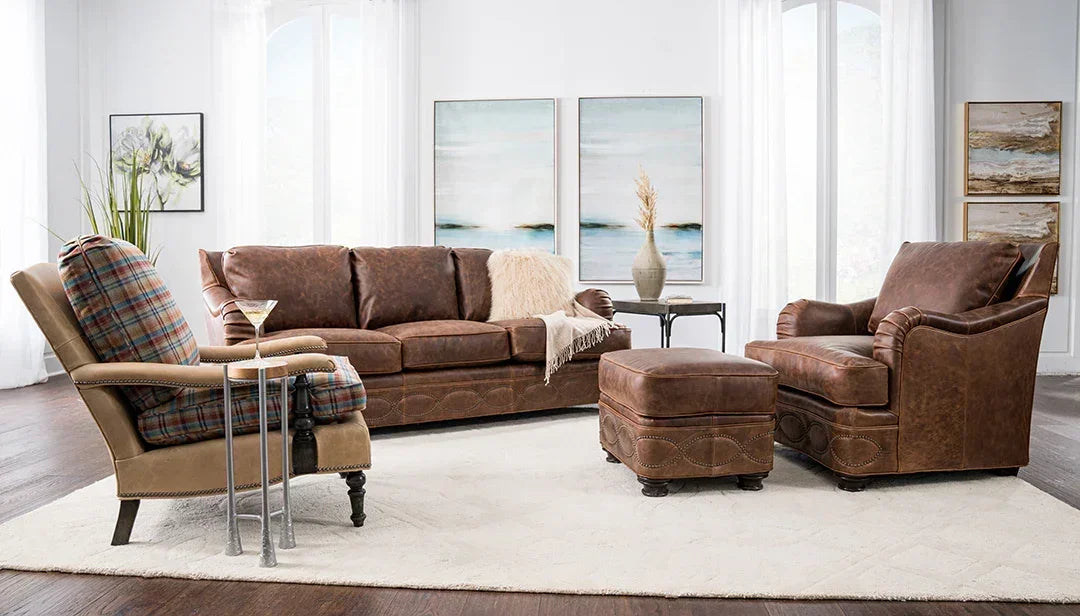

If you've been searching for an area rug that actually looks the way you imagined it, you're in the right place. The right rug does more than warm up a floor. It anchors furniture, frames a seating area, and sets the entire room look from the moment you walk in. For high-end buyers, ranch homeowners, and anyone styling a getaway lodge or vacation property, picking the right rug is one of the most rewarding parts of the design process.
Here is a quick path to finding your perfect rug before we dive into the details:
-
Measure the room and map out where each piece of furniture will sit.
-
Decide whether the rug should be a focal point or a quiet foundation.
-
Pick the right size rug for your layout, leaving enough margin around the furniture legs.
-
Match the material and pile height to your foot traffic and lifestyle.
-
Add a rug pad to protect floors and extend the life of your rug.
Step 1: Begin with Size and Scale

Area rug size is where most rooms go wrong. Choosing a small rug for a larger room is the number-one mistake people make when updating a space, since the layout instantly feels disconnected. The right size rug pulls everything together in seconds.
A few general rules from interior designers worth keeping in mind:
-
Living room: Your rug should sit under at least the front legs of every sofa and chair. In a larger room, scale up so all furniture legs land on the rug and the seating area feels grounded.
-
Dining room: Plan for a dining room rug that extends about 24 inches past the dining table on every side, so dining chairs stay on the rug even when pulled out.
-
Bedroom: A queen bed looks best with two-thirds of the frame on the rug. You can also flank the bed with matching runner rugs that meet the bedside tables.
-
Family room and open floor plans: Use a larger rug to anchor the conversation area, with the coffee table fully on top. In open floor plans, use two rugs to define separate zones without breaking up the sightline.
Step 2: Choose the Shape That Fits the Space
Most rooms call for a rectangular rug because it follows the natural lines of your furniture. That said, the right shape can change how a room feels.
-
A round rug softens corners and looks great under a circular dining table or in a reading nook with a single chair.
-
A circular rug in an entryway gives a warm welcome without competing with squared-off architecture.
-
Square rugs sit nicely under symmetrical seating arrangements.
-
Runner rugs finish hallways, galley kitchens, and the bedside of a queen bed.
The Aztec Whiskey River Floor Runner in Turquoise is a great example of how the right shape and pattern can give a long, narrow space its own personality.
Step 3: Match the Material to Your Lifestyle
Material drives both look and longevity. Your rug needs to handle real life, especially in a high-traffic area like an entry, hallway, or family room.
-
Commercial-grade nylon: Stain resistant, fade resistant, and built for busy households. Most of Your Western Decor's Made in USA rugs use this construction, which is why they hold up beautifully under boots, pets, and spills.
-
Wool: Soft, resilient, and naturally stain resistant. A classic for living rooms and bedrooms.
-
Jute and burlap: Earthy texture and natural color, perfect for layering. Browse the Jute & Burlap Rugs collection for understated bases.
-
Cowhide and hair-on-hide: One of the most striking choices in western interiors. Hypoallergenic, naturally stain resistant, and full of texture you cannot get from a woven rug. Explore cowhide rugs or the Premium Luxury Cowhide Rugs collection for showpieces.
-
Outdoor rug fibers: Weather-resistant options extend your living space onto patios and porches without sacrificing style.
If you have pets or kids, a washable rug or a low-pile rug in a forgiving pattern is the easiest path to keeping things looking fresh between deep cleans.
Step 4: Get Pile Height Right
Pile height is the depth of the rug's fibers, and it changes how a room functions day to day.
-
Low pile (around a third of an inch) is the right call for dining rooms, entryways, and any high-traffic area. Dining chairs slide easily and crumbs sweep up fast. A low-pile rug also layers cleanly under another rug for added depth.
-
Medium pile adds softness underfoot, making it a favorite in living rooms and master bedrooms.
-
Higher pile feels cozy in a den or reading corner, but it is harder to clean and shows wear in busy rooms.
Pair any rug with a quality rug pad. A rug pad keeps the rug from shifting, protects your floors, and adds cushioning that makes even a flat-weave feel softer underfoot.
Step 5: Decide Between Focal Point or Foundation
A rug can be the focal point of a room or the quiet base that ties your color scheme together. Both approaches work, the trick is deciding which role you want it to play.
For a statement piece, look at something like the Aztec Whiskey River Rug in Turquoise or the Longhorn Denim Splatter Western Rugs. Both have enough personality to anchor a living room or family room on their own.
For a softer foundation that lets furniture, leather, and wood finishes lead, a tone-on-tone palette like the Desert Hues Area Rugs or the Southwestern Rancher Area Rugs gives you a warm, lived-in base.
Step 6: Plan Room by Room![]()

Size handles the footprint, but each room asks something different from a rug in terms of function. Think about what the rug needs to do once it is down.
Entryway
This is the hardest-working spot in the house. Pick a low-pile rug or runner rug that handles tracked-in dirt, snow, and shoes without holding onto grit. A washable rug or a forgiving pattern keeps the space looking clean between deep cleanings.
Living Room
This is where comfort meets statement. A rug here defines the seating area, warms up hardwood or tile, and softens the acoustics of larger spaces. A medium pile feels great under bare feet, while a low pile gives you a cleaner base for layering.
Bedroom
Soft is the priority. Most people step onto the rug before anything else in the morning, so go for a higher pile next to the bed or a hide layered over a flat-weave for warmth. A larger rug under the bed cuts noise and makes the room feel finished.
Dining Room
Function matters more than texture here. A flat-weave or low-pile rug lets dining chairs slide back without catching, and stain-resistant fibers handle spills without fuss. Pick a pattern that will not show every crumb.
Outdoor Patios and Porches
An outdoor rug needs to handle sun, moisture, and foot traffic without fading. Look for weather-resistant fibers and a tight weave that will not trap dirt. The right outdoor rug extends your living space and turns a plain patio into an inviting room.
Step 7: Layer for Depth
Layering is one of the easiest ways to add dimension to a room. Start with a flat, neutral base like jute or burlap, then add a patterned western or southwestern rug on top to act as the focal point. Hides also layer beautifully over woven rugs, especially at the foot of a bed or in front of a sofa.
A few quick layering rules:
-
Keep the base rug a few inches larger than the top piece on all sides.
-
Vary texture between the two rugs so they read as distinct pieces.
-
Use a rug pad under the base to keep both layers from slipping.

Step 8: Think About Longevity and Investment
A rug is not just a decorative accessory, it is an investment in your home. A well-made area rug can last for years, often decades, and move with you from one home to the next. For luxury homes, lodges, and high-end short-term rentals, an American-made rug delivers heritage-level craftsmanship that pays off over time.
Browse the Rugs Made in the USA collection for heirloom-quality designs built to commercial grade specs.
Step 9: Add Personality with Unique Pieces
Rugs are also an opportunity to tell your story. Choose pieces that reflect your personality, travels, or heritage. A distinctive area rug with western influence doesn’t just cover the floor, it sets the tone for the entire home, sparking conversations and making guests feel at home.
When to Bring in an Interior Designer
If room size, color scheme, or layout has you stuck, this is where an interior designer earns their keep. Your Western Decor partners with Timeless Interiors, including virtual design help, so you can talk through pieces before you commit. They will look at your furniture, floor plan, and lifestyle, then recommend the right rug size and style for the space.
Find Your Perfect Rug at Your Western Decor

Your Western Decor has been outfitting ranch homes, lodges, and refined western interiors since 2009 from its Pilot Rock, Oregon, headquarters. Founder Randee McKague built the shop around high quality, handcrafted, Made in USA pieces, and the rug collection reflects that same standard. Every American-made area rug is built to commercial-grade specs, stain resistant, fade resistant, and made to order in six sizes, so you can pick the right area rug size for any room.
Ready to find the right rug? Browse the full Area Rugs & Accent Rugs collection to see every style, shape, and size, or reach out for design support from the team. Your perfect rug is waiting, and Your Western Decor will help you bring the space you've been picturing to life.
Frequently Asked Questions
1. How long do Your Western Decor's rugs take to ship? +
Most of the American-made area rugs are crafted to order and ship within about two to three weeks. Lead time is part of how the rugs stay commercial grade and built to last, since each one is made specifically for your order rather than pulled from a warehouse. If you are on a deadline for a new build or a vacation rental opening, reach out to the team and they will walk you through current production timing.
2. How do I care for a cowhide rug? +
Cowhide is naturally stain resistant and hypoallergenic, so day-to-day care is simple. Shake the hide out or vacuum with the suction attachment on low (skip the beater bar). Blot spills with mild soap, warm water, and a soft brush, working with the grain of the hair. Rotate the hide every three months in high-traffic areas, and keep it out of direct sunlight to protect the color.
3. Can I layer rugs, and how do I do it well? +
Layering is one of the easiest ways to add depth to a room. Start with a flat, neutral base like a jute or burlap rug, then center a smaller patterned rug on top to act as the focal point. Hides also layer beautifully over woven rugs, especially in front of a sofa or at the foot of a bed. Keep the base rug a few inches larger than the top piece on all sides.
4. Which rugs hold up best in homes with kids or pets? +
Look for a low-pile rug in a forgiving pattern, ideally one made with commercial-grade nylon. Patterned designs hide everyday wear better than solid colors, and a low pile cleans up faster after spills, tracked-in dirt, and the occasional muddy paw. Pair it with a quality rug pad to keep it in place, and a washable rug is worth considering for entries and play areas.